
AI Search Optimization in the Philippines: Rank Higher
How Philippine businesses use AI to improve search rankings — what changed, what still works, and where AI genuinely helps.


AI Engineer · 36+ years in IT · Japanese, based in Manila for 13+ years

Summary
- AI-driven SEO for Philippine SMEs means optimizing content for both Google rankings and AI-generated answers, not just blue links.
- Manual keyword research and template content no longer rank well because search engines now measure topical depth and trust signals.
- A practical implementation path starts with keyword clustering, content quality, structured data, and tracking AI citation visibility.
Why Search Visibility Is Harder for Philippine Businesses Today
| Challenge | Impact on Philippine SMEs |
|---|---|
| AI Overviews reduce clicks | Users get answers without visiting the site |
| Limited in-house SEO skill | Few staff trained in modern search optimization |
| Weak topical authority | New sites lose to established competitors |
| Thin, template-based content | Fails Google quality signals |
The search landscape that Philippine SMEs compete in has shifted. Google's AI Overviews now summarize answers on the results page, and many users never click a traditional link. For a small business in Makati or Cebu selling services to a local market, losing that first-screen visibility means losing leads.
 Philippine SMEs face new visibility challenges as AI Overviews reshape search results.
The in-house skill gap is real. A large majority of Filipino MSMEs are eager to adopt digital tools, yet only a small share currently use them, mostly due to lack of skills and perceived complexity. SEO sits squarely in that gap. Most owners know they need to rank on Google, but the day-to-day tactics have changed faster than local training can catch up.
Topical authority is the second barrier. Search engines now look for sites that cover a subject with real depth, not a single thin page targeting one keyword. A pawnshop in Quezon City that publishes one "about us" page and three thin blog posts simply cannot compete with a larger site that has structured its content across dozens of related topics.
Template-based content is the third problem. Many small businesses in the Philippines start with a generic WordPress template and boilerplate copy. Templates feel safe, and that is the problem: they produce pages that read like every other page in the category, which is exactly what search engines treat as low-value.
Related: Practical AI-Powered SEO Tactics to Improve Search Rankings for Philippine Businesses explains this in detail.
Why Manual SEO Tactics No Longer Keep Up
| Manual Approach | Limit in 2026 |
|---|---|
| Keyword stuffing | Penalized, not rewarded |
| Single-keyword pages | Lose to topic clusters |
| Manual competitor checks | Too slow to catch trends |
| One-time technical audits | Issues reappear weekly |
The old SEO playbook was simple: pick a keyword, write a page, build some backlinks, wait for rankings. That approach produces little result today. Keyword density no longer correlates with high rankings, and top pages often have lower density than lower-ranked ones.
Single-keyword pages lose for a related reason. Search engines cluster related queries and reward sites that cover a topic across multiple connected pages. A Philippine coworking space that publishes one page for "coworking space Makati" will not outrank a competitor that has built ten connected pages on pricing, amenities, day passes, meeting rooms, and neighborhood comparisons.
Manual competitor research is another bottleneck. Checking ten competitors by hand, reading their pages, and noting what changed takes a full afternoon. By the time the review is done, Google has already indexed new content and adjusted its rankings. Small teams in the Philippines rarely have the bandwidth for this weekly.
Technical audits fit the same pattern. A site with broken links, duplicate meta tags, or slow page loads will slip in rankings. Manual audits happen once a quarter at best. In that gap, new issues accumulate. A site with 500 pages can easily drift into a state where a fifth of pages have technical problems that no one has time to find.
How AI-Driven SEO Solves These Problems
| AI Capability | What It Does for Ranking |
|---|---|
| Keyword clustering | Groups related terms into topic pillars |
| Content scoring | Measures depth against top-ranked pages |
| Automated technical audits | Finds issues across entire site continuously |
| AI Overview tracking | Monitors citation in generative answers |
| Intent matching | Aligns content with search intent, not just keywords |
AI-driven SEO is not magic automation. It is the use of machine learning tools to handle the volume and speed that modern search requires, while humans keep control of strategy and voice.
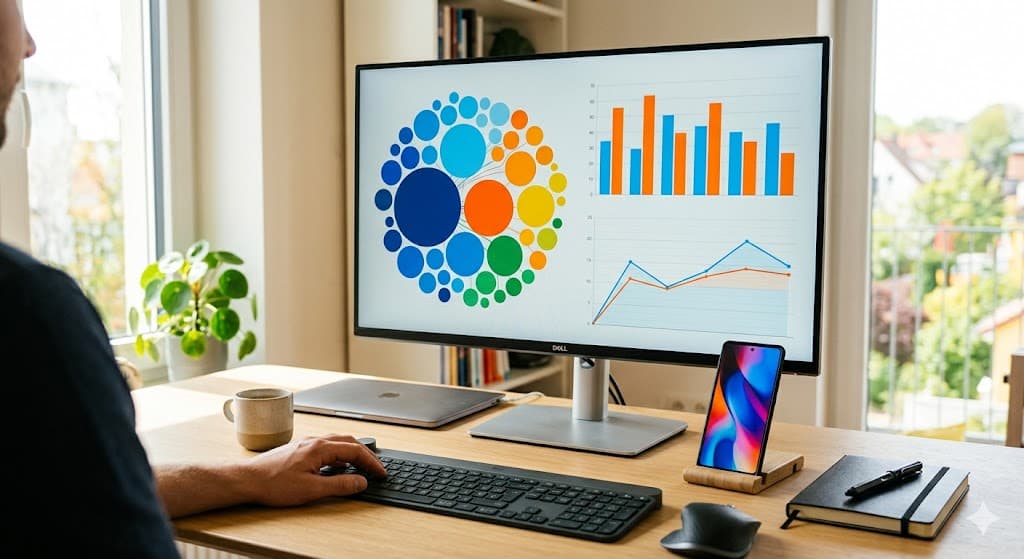 AI tools group related queries into topic clusters and score content depth automatically.
Keyword clustering is the first win. AI tools analyze thousands of related search queries and group them into topic clusters. Instead of writing one page for "AI consulting Philippines," the tool reveals 30 connected queries that can form a pillar-and-cluster structure. This is how topical authority gets built.
Content scoring is the second. Tools like Clearscope, Surfer SEO, and Frase compare a draft page to the top-ranking pages for a target query and score it on topical coverage, semantic variety, and structure. A writer can see exactly which subtopics are missing before publishing. For a Philippine SME that cannot afford a full content team, this compresses days of research into minutes.
Technical audits run continuously. AI crawlers monitor broken links, duplicate tags, missing alt text, slow pages, and redirect chains around the clock, then prioritize the fixes by traffic impact. Manually auditing a 5,000-page site could take weeks, but an AI crawler finishes the same task in hours.
AI Overview tracking is the newest and most important capability. Rankings alone are no longer enough. In 2026, visibility depends partly on whether a brand is cited inside AI-generated summaries on Google, ChatGPT, Perplexity, and similar systems. New tools now track how often your domain appears in these synthesized answers, giving you a metric beyond blue-link position.
Intent matching ties it all together. AI models read a query and infer the underlying intent (informational, transactional, navigational), then recommend the right content format. A Philippine fintech startup targeting "GCash alternatives" needs a comparison page, not a brand story.
Related: How GEO Optimization Helps Philippine Businesses Win in the AI Search Era explains this in detail.
Step-by-Step Implementation for Philippine SMEs
| Step | Focus |
|---|---|
| 1 | Audit current rankings and AI visibility |
| 2 | Build keyword clusters around core services |
| 3 | Produce deep, locally relevant content |
| 4 | Add structured data and technical fixes |
| 5 | Track AI citations and adjust monthly |
Step 1: Audit current rankings and AI visibility. Start with a tool like Ahrefs, SEMrush, or Ubersuggest to export your current ranking keywords. Then paste your top pages into ChatGPT or Perplexity and ask the AI to summarize what the page covers. If the AI misses your key points, the page is not structured for AI extraction. Budget for basic AI-SEO tooling in the Philippines typically runs PHP 5,000 to PHP 15,000 per month for small teams.
 A disciplined monthly cadence turns AI-driven SEO into measurable ranking gains.
Step 2: Build keyword clusters around core services. For each core service (for example, "web development for restaurants"), use an AI tool to generate 20 to 40 related queries. Group them into a pillar page plus supporting articles. Treat this as the content map for the next six months.
Step 3: Produce deep, locally relevant content. AI tools draft faster, but the content still needs local context that only a human can supply: peso pricing, BIR registration requirements, DTI rules, references to local areas like BGC or Cebu IT Park, and examples from Philippine industries. Generic AI output without local anchoring will not rank.
Step 4: Add structured data and technical fixes. Schema markup (FAQ, HowTo, LocalBusiness, Product) helps AI systems extract your content accurately. Combined with Core Web Vitals improvements, this step often moves pages several positions without any new content.
Step 5: Track AI citations and adjust monthly. Set up a monthly check of how your brand appears in AI-generated answers for your key queries. If a competitor is being cited and you are not, the usual fix is stronger topical depth, clearer author credentials, and more explicit answer formatting early in the page.
SEO needs a review cadence for the same reason any long project does. Without a weekly or monthly check, AI tools produce a great deal of output that drifts away from the business goal, and nobody notices until a quarter has passed.
Related: SEO Can No Longer Be Won on Volume: The Content Strategy Japanese Companies Should Adopt in the Philippine Market in the AI Search Era explains this in detail.
Results and ROI: What Philippine Businesses Can Expect
| Metric | Realistic Expectation |
|---|---|
| Time saved on research | Several hours per week per content piece |
| Ranking improvement timeline | 3 to 6 months for most SME sites |
| AI citation share | Gradual, tied to topical authority |
| Content production speed | Faster drafting, similar review time |
| Cost vs. agency retainer | Often lower than full-service SEO agencies |
Measurable gains take time. A Philippine SME that implements AI-driven SEO consistently can expect noticeable ranking improvements in three to six months, not three to six weeks. Search engines need time to crawl, index, and evaluate new content, and topical authority builds across quarters.
Time savings are real and immediate. AI tools handle keyword research, content briefs, and technical audits that previously took hours. That time can be reinvested in strategy, local outreach, and the kinds of business-specific judgments that AI cannot make.
Content production speeds up, but review time does not. This is the point where many Philippine teams go wrong. They assume AI-generated drafts can be published as-is. In practice, a human editor needs to check facts, add local examples, and remove generic phrasing. Skipping this step produces content that ranks poorly and damages brand trust.
Cost comparison matters for SMEs. A full-service SEO agency retainer in the Philippines typically ranges from PHP 40,000 to PHP 150,000 per month, depending on scope. An AI-driven in-house approach using tools like Surfer SEO or Frase (around PHP 5,000 to PHP 15,000 per month) plus a content writer or virtual assistant can deliver comparable results for businesses with the internal discipline to run it.
The honest caveat: AI-driven SEO is not a guaranteed win. Sites with no authority, weak products, or poor user experience will not rank no matter how advanced the tooling. AI accelerates what already works; it does not rescue weak fundamentals.
FAQ
Q: Do I need to replace my current SEO agency with AI tools?
A: Not necessarily. Many Philippine businesses get the best results by pairing an agency or consultant with AI tools rather than replacing one with the other. AI handles scale and speed; human strategists handle judgment and local context. If your current agency has not adapted to AI Overviews or generative search, that is a sign to discuss their roadmap before renewing.
Q: Will AI-generated content get my site penalized by Google?
A: Google's current position is that AI-generated content can rank as long as it is original, helpful, and meets quality guidelines. Penalties generally apply to plagiarism or thin, low-value output. The practical rule is human review, fact-checking, and adding local context before publishing. Pure AI output without editing is the risk, not AI assistance itself.
Q: How much should a Philippine SME budget for AI-driven SEO tools?
A: A practical starting stack costs roughly PHP 5,000 to PHP 15,000 per month, covering a content optimization tool (Surfer SEO, Frase, or Clearscope), a keyword research tool (Ubersuggest or Ahrefs Lite), and a basic technical audit tool. Larger sites or e-commerce businesses may need PHP 20,000 to PHP 40,000 per month.
Q: Is English-only content enough for the Philippine market?
A: English content covers most B2B and professional services queries in the Philippines. For consumer-facing businesses, mixing in Tagalog or Taglish for specific queries can open traffic that English-only sites miss. AI tools can help generate Tagalog variants, but native review is essential because direct translation often misses cultural nuance.
Q: How do I know if my content appears in AI Overviews?
A: Search your target queries directly on Google, ChatGPT, and Perplexity, and check whether your domain is cited. Dedicated tracking tools are emerging, but monthly manual checks on your top 20 keywords are a reasonable starting point for most Philippine SMEs.
Getting Started with AI-Driven SEO
AI-driven SEO rewards businesses that treat it as infrastructure, not a one-time project. Philippine SMEs that commit to topical depth, local context, and a monthly review cadence can close the gap with larger competitors faster than they expect. The starting point is simple: audit your current visibility across Google and AI-generated answers, pick one core service to build a topic cluster around, and run the first three-month cycle with discipline. If the internal capacity is not there, partnering with a local team that combines AI tooling with Philippine business context is often the faster path.
Sources & References
- Philippine Institute for Development Studies (PIDS), "Readiness for AI Adoption of Philippine Business and Industry" (2025) — https://www.pids.gov.ph/details/news/press-releases/ph-businesses-lag-in-ai-adoption-despite-digital-access-pids
- Management Association of the Philippines, "The SME Investment Paradox: How to Grow while Cutting Costs in 2026" — https://map.org.ph/the-sme-investment-paradox-how-to-grow-wzhile-cutting-costs-in-2026/
- Adobe Business, "SEO in 2026: How AI is reshaping the fundamentals of search" — https://business.adobe.com/uk/blog/seo-in-2026-fundamentals
- Search Engine Land, "The future of AI search: What 6 SEO leaders predict for 2026" — https://searchengineland.com/ai-search-visibility-seo-predictions-2026-468042
- BusinessWorld, "AI adoption in Philippine e-commerce faces hurdles despite consumer enthusiasm" (2025) — https://www.bworldonline.com/special-reports/2025/09/08/695829/ai-adoption-in-philippine-e-commerce-faces-hurdles-despite-consumer-enthusiasm/
About the author
Founder / AI Engineer (36+ years in IT)
- ●From Tokyo · based in Manila for 13+ years
- ●36+ years in IT (development, SEO, AI)
- ●IBM Certified Generative AI Engineer
- ●AI chatbots, RAG & AI agent development
A Japanese AI engineer with 36+ years in IT and 13+ years on the ground in the Philippines. I write from hands-on experience to help Japanese companies adopt AI that actually delivers results — chatbots, workflow automation, AI agents, and AI-driven marketing. Feel free to reach out in Japanese or English.
Your Competitors Are Already Using AI!
Is your business keeping up?
Related Articles

Personalised Marketing: Four Segments First
Personalisation for a Philippine SME starts with four behavioural segments and language matching, not with a platform.
8/11/2026

Generative AI for Social Media in the Philippines
Five techniques Philippine businesses use to run social media with generative AI — one idea into a week of posts, and more.
7/24/2026

Content Marketing: Dividing Work Between Human and AI
Let AI handle research, drafts, and repurposing; keep judgement, experience, and the final read with people.
7/23/2026

AI-Powered SEO Tactics for Philippine Businesses
Five practical tactics: keyword clustering, AI-assisted drafting, on-page work, internal links, and measurement.
7/22/2026

What Is GEO? Customer Acquisition After SEO
GEO is how Philippine businesses get cited in ChatGPT, Claude, and Gemini answers. What it is and how it differs from SEO.
7/21/2026

Generative AI Content Workflow for Philippine SMEs
A generative AI content workflow that lets a Philippine SME publish more without losing quality — tools, steps, and review checks.
7/20/2026