
Avoiding Failed AI Projects: The 3 Things That Matter
Why AI adoption fails at Philippine SMEs, and the three things that separate the projects that work: goals, data, and people.


AI Engineer · 36+ years in IT · Japanese, based in Manila for 13+ years

Summary
- AI projects in the Philippines fail most often because of unclear business goals, not weak technology.
- Clean, well-organized data and documented processes must be in place before any AI tool can deliver real value.
- Budget for staff training, change management, and ongoing improvement decides whether an AI project keeps working after launch.
The Technology Gap That Trips Up Philippine SMEs: 3 Recurring Problems
| Problem | What It Looks Like in Practice |
|---|---|
| Chasing tools, not goals | Buying software before knowing what problem it should solve |
| Scattered, messy data | Records spread across notebooks, group chats, and spreadsheets |
| No plan for people | Staff receive a new tool but get no training or follow-up |
Many small and medium businesses in the Philippines feel pressure to "use AI" without a clear reason. A common pattern is buying a tool first and then looking for a problem it can fix. This usually leads to wasted budget and a system nobody uses. The better starting point is a specific business goal, such as cutting the time spent on monthly reports or answering customer messages faster.
 Unclear goals and messy data are the most common reasons AI projects stall for Philippine SMEs.
The second problem is data. A typical SME keeps important information in many places at once — a physical logbook at the counter, a Viber group, and a few Excel files on different laptops. AI tools cannot work well with information that is scattered and inconsistent. Before any technology can help, the data behind the process needs to be gathered and organized.
The third problem is people. A tool is only as useful as the team that uses it. When staff receive new software without training, they often go back to the old manual way within weeks. Successful adoption treats staff training and follow-up as part of the project, not as an afterthought.
Related: Avoiding Costly AI Adoption Failures explains this in detail.
Where Manual Work and Off-the-Shelf Tools Reach Their Limits: 3 Weak Points
| Common Approach | Why It Falls Short |
|---|---|
| Manual and spreadsheet work | Breaks down as volume grows and errors slowly creep in |
| Generic off-the-shelf tools | Low upfront cost, but cannot match how your business really works |
| One-off vendor projects | Work stops after handover, and no improvements follow |
Manual processes and spreadsheets are fine when a business is small. A sari-sari store owner tracking stock by hand, or a startup logging orders in one Excel sheet, can manage for a while. The trouble starts as volume grows. More transactions mean more copying, more typing, and more chances for human error. The work also depends heavily on one or two staff who "know the file," which is risky when they are absent or leave.
Off-the-shelf tools look like an easy answer because the upfront cost is low. In my own work managing large project budgets as the client, I saw a clear pattern: template approaches were cheap to start, but they could not handle real business complexity. The successful custom builds required detailed upfront business analysis, phased rollout, and continuous adjustment. A generic tool forces your business to fit the software, when it should be the other way around.
One-off vendor projects fail in a quieter way. The system is delivered, everyone is happy at handover, and then nothing changes for months. From the same experience as a client, the projects that succeeded naturally produced improvement proposals over time, while the failed ones stalled after delivery with no proactive suggestions. Technology that never gets reviewed slowly falls behind the needs of the business.
How AI and Modern Tools Close the Gap: 3 Practical Solutions
| AI Solution | What It Does for You |
|---|---|
| AI-assisted document and data handling | Reads, sorts, and pulls information from forms and files |
| Custom workflow automation | Automates the exact steps your team repeats every day |
| AI customer-support tools | Answers common questions in English and Taglish, around the clock |
AI technology is well-suited for reading and sorting large amounts of text and data. Instead of a staff member manually copying figures from receipts, delivery slips, or PDF invoices, an AI-assisted tool can pull the needed details into a clean, single record. This is useful for document-heavy work like accounting support, order processing, and inventory updates.
 Custom AI tools and workflow automation fit the way your team already works.
Custom workflow automation targets the exact steps your team repeats daily. For a small logistics firm in Metro Manila, that might mean automatically matching bookings to drivers and sending confirmation messages. For a clinic, it might mean organizing appointment requests. The value comes from building around your real process, not a generic template, so the tool fits the way your people already work.
AI customer-support tools help with the flood of repeat questions that eat up staff time. A well-set-up assistant can answer common questions about prices, store hours, or order status in both English and Taglish, at any hour. This frees your team to focus on the harder cases that truly need a human. These tools work best as support for your staff, not as a full replacement for them.
Related: Maximising Technology ROI for Philippine SMEs explains this in detail.
Rolling Out AI Without the Usual Mistakes: 5 Steps
| Step | Action |
|---|---|
| 1. Define the problem | Name the pain point and one clear success measure |
| 2. Prepare your data | Gather and clean records into one organized place |
| 3. Run a small pilot | Test on one process before rolling out widely |
| 4. Train and document | Coach staff and write down every change |
| 5. Review and improve | Measure results and adjust on a regular schedule |
Start by defining the problem in plain words and picking one success measure. "Reduce the time to prepare payroll from two days to half a day" is a clear target. A vague goal like "become more modern" gives you no way to judge whether the project worked.
 A step-by-step rollout with training and documentation keeps AI projects on track.
Next, prepare your data. Bring the scattered records into one organized place and fix obvious errors, such as duplicate customers or inconsistent product names. This step is unglamorous but decides much of the final result, because an AI tool built on messy data will produce messy output.
Then run a small pilot before rolling out widely. Choose one process, one team, and a short test period. A pilot keeps early mistakes cheap and gives you real feedback from the people who will use the tool.
Training and documentation come next, and this is where many projects quietly break. As a client commissioning large-budget web and system development projects, I set up weekly progress meetings and required that every specification change be documented. That single habit kept rework to a minimum. Coaching staff and writing down each change protects the project when someone is on leave or a new hire joins.
Finally, review and improve on a regular schedule. Set a monthly check to compare results against your success measure and adjust. Treating the launch as the start — not the end — is what keeps an AI system useful over time.
Related: Philippine AI Solutions Competing Worldwide explains this in detail.
Results and ROI: What Philippine SMEs Can Realistically Expect: 4 Outcomes
| Outcome | What to Expect |
|---|---|
| Time saved | Fewer hours spent on repetitive manual tasks |
| Fewer errors | More consistent and reliable output |
| Faster responses | Customers get answers sooner |
| Better cost efficiency | Savings build up over months, not days |
The clearest early win is time saved. Work that once took hours of manual copying can run in the background, freeing staff for higher-value tasks like sales, planning, or customer care. For a growing SME, that recovered time often matters more than any single peso figure.
Fewer errors is the second outcome. Automated steps do the same thing the same way every time, which reduces the small mistakes that lead to wrong invoices, stock gaps, or unhappy customers. Consistent output also makes it easier to trust your own reports.
Faster responses improve how customers see your business. When common questions are answered quickly, buyers feel looked after and are more likely to return. For online sellers competing on platforms like Lazada and Shopee, response speed can directly affect ratings and repeat orders.
The financial return usually builds slowly rather than appearing overnight. There is a real upfront cost in pesos for setup, data cleanup, and training, so honest planning matters. Over months, though, the mix of saved time, fewer errors, and better service tends to add up to meaningful cost savings. On a national scale, AI adoption is projected to add trillions of pesos to the Philippine economy in the years ahead, and the country has been climbing global AI readiness rankings — a sign that local support and talent are growing.
FAQ
Q: How much does AI adoption cost for a small business in the Philippines?
A: Costs vary widely depending on the problem you are solving. A simple AI customer-support setup is far cheaper than a custom automation system built around a complex process. The safer approach is to start with a small pilot on one process, confirm the value, and then expand. This keeps the initial peso outlay low while you learn what works.
Q: Do we need a big data team or in-house engineers to start?
A: No. Most SMEs start with a small pilot and a local partner or IT consultant rather than a full in-house team. What matters more is that someone on your side owns the project, understands the business goal, and helps keep your data organized. You can build internal skills gradually as adoption grows.
Q: Is our customer data safe under Philippine law when we use AI?
A: The Data Privacy Act of 2012 (Republic Act No. 10173) governs how personal data is handled, and the National Privacy Commission has issued guidance on AI systems that process personal data. In short, you remain responsible for the data even when a tool or vendor handles it. Choose partners who understand these rules, limit the personal data you feed into any tool, and document how data is used.
Q: Can AI tools handle Taglish or Filipino, not just English?
A: Yes. Modern AI language tools can understand and reply in English, Filipino, and mixed Taglish, which fits how many Filipino customers actually chat. Quality still improves with testing, so it is wise to review sample conversations before going live and to keep a human option for tricky cases.
Q: How long before we see results?
A: Simple tasks like sorting messages or answering common questions can show results within weeks. Larger custom automation takes longer, because data preparation and testing come first. Setting a clear success measure at the start makes it easier to see progress honestly instead of guessing.
Getting AI Adoption Right From the Start
Avoiding failure with AI comes down to three points: begin with a clear business goal, get your data and processes ready, and invest in the people who will use the tool. Technology is rarely the reason a project fails. The reason is usually a skipped step in planning, preparation, or follow-through. This guidance reflects hands-on AI engineering work in the Philippines, backed by professional AI and data-science certifications.
If you are a Philippine SME or startup weighing your first AI project, start small and specific. Pick one painful process, define what success looks like, and test it before scaling. PH AI Works can help you scope that first pilot, prepare your data, and build a solution that fits how your business really works.
Sources & References
- DTI — National AI Strategy Roadmap 2.0 and Center for AI Research — The Philippine government's national AI strategy, adoption goals, and economic projections for AI.
- National Privacy Commission — Advisories & Circulars (incl. Advisory No. 2024-04 on AI) — Official guidance on applying the Data Privacy Act of 2012 to AI systems that process personal data.
- UNESCO — Global AI Ethics and Governance Observatory: Philippines — Country overview of the Philippines' AI landscape, readiness, infrastructure challenges, and workforce policies.
About the author
Founder / AI Engineer (36+ years in IT)
- ●From Tokyo · based in Manila for 13+ years
- ●36+ years in IT (development, SEO, AI)
- ●IBM Certified Generative AI Engineer
- ●AI chatbots, RAG & AI agent development
A Japanese AI engineer with 36+ years in IT and 13+ years on the ground in the Philippines. I write from hands-on experience to help Japanese companies adopt AI that actually delivers results — chatbots, workflow automation, AI agents, and AI-driven marketing. Feel free to reach out in Japanese or English.
Your Competitors Are Already Using AI!
Is your business keeping up?
Related Articles

Competitor Research With AI in One Hour a Week
A four-step weekly routine that collects and compares competitor information, so pricing decisions rest on current data.
8/10/2026

When Not to Use AI: Tasks to Keep Human
An honest look at the five tasks Philippine businesses should keep human — consequential decisions among them.
8/9/2026

Turning Full-Stack Developers Into Agent Specialists
Hiring an AI agent specialist in the Philippines is slow and costly. Retraining the developers you have is usually faster.
8/7/2026

What to Put in an AI Vendor Contract
AI vendor contracts in the Philippines often skip what matters: data return, audit logs, model changes, and exit protection.
8/6/2026
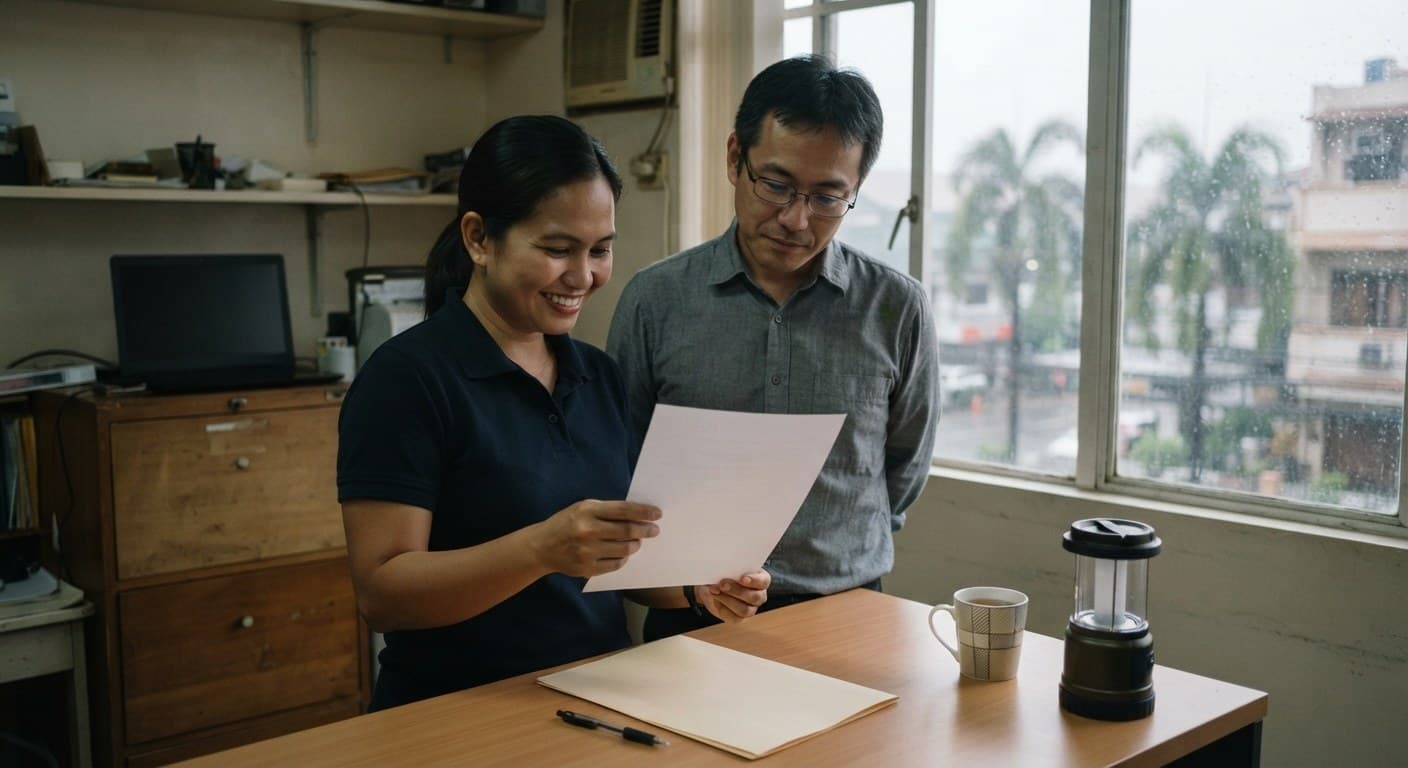
Keeping AI Running Through Brownouts and Typhoons
Cloud AI does not stop when the office loses power — your access does. A continuity plan for Philippine operations.
8/5/2026

Your AI Vendor's Legal Form Changes the Deal
SEC-registered corporation or DTI sole proprietor — in the Philippines the difference changes contracts, banking, and recourse.
8/3/2026