
Reducing Costly Rework in AI Application Projects
A full-stack developer's view of how Philippine SMEs build reliable applications without paying twice for the same work.


AI Engineer · 36+ years in IT · Japanese, based in Manila for 13+ years

Summary
- Custom AI applications outperform off-the-shelf templates once a business has complex, specific workflows that generic tools cannot model.
- Weekly progress reviews and documented specification changes are the most effective way to cut expensive rework on an AI software project.
- Data Privacy Act compliance must be designed into an AI app from the first planning meeting, not bolted on after launch.
Why AI App Projects Stall for Philippine SMEs
| Challenge | Why It Hurts |
|---|---|
| Unclear requirements | Work begins before anyone agrees what "done" looks like, so the budget drains on rebuilds. |
| Skills and talent gap | Few teams can handle both the app interface and the AI logic, so projects get handed off and lose coherence. |
| Connectivity and infrastructure | Uneven internet and limited local compute make some AI features slow or expensive to run. |
| Compliance uncertainty | Owners are unsure how the Data Privacy Act applies, so they delay or skip safeguards. |
The Philippine digital economy has grown into a roughly $36 billion market, yet the pace of real AI use inside businesses tells a different story. While more than nine in ten establishments own computers and most have internet access, only about one in five firms is even aware of AI and related technologies, and hands-on adoption among micro, small, and medium enterprises remains thin.
 Many AI app projects stall when an owner's idea is never turned into a written, testable plan.
A full-stack developer is simply someone who builds both the part of an app that users see and click, and the behind-the-scenes parts like servers and databases that make it work. From that vantage point, the reason projects stall is rarely the technology itself. It is the gap between an owner's idea and a written, testable plan. When that gap stays open, every misunderstanding becomes a paid revision, and the cost climbs long after the quote was signed.
Related: Building AI Web Apps: Design Tips That Decide Success explains this in detail.
Where Template and DIY Approaches Fall Short
| Approach | Limitation |
|---|---|
| Off-the-shelf template | Cheap to start, but cannot bend to the way your business actually operates. |
| Generic freelancer hire | May code well, yet lacks the business analysis to question vague requirements. |
| No written documentation | Verbal changes get forgotten, so the same fix gets paid for twice. |
| Compliance added later | Retrofitting privacy controls into a finished app is slow and risky. |
The most common shortcut is the template approach, and it is tempting because the initial cost is low. From experience as a client commissioning large-budget web system development projects, I learned that template approaches handle simple needs but fail once business complexity appears. A successful custom build instead requires detailed upfront business analysis, phased implementation, and continuous adjustment as real users start touching the product.
The do-it-yourself route has the same trap in a different shape. A capable freelancer can produce clean code, but code is only valuable when it solves the right problem. Without someone documenting specification changes in writing, the project drifts. A change agreed in a chat message on Monday is forgotten by Friday, and the team rebuilds the same screen a second time. For a small business paying in pesos, that repetition is the quiet killer of any technology budget.
How Modern AI Development Solves These Problems
| Technique | What It Does |
|---|---|
| Custom workflow design | Maps the app to how your team actually works, not a generic mold. |
| Retrieval-augmented generation | Lets the AI answer using your own documents instead of guessing. |
| AI-assisted coding and testing | Speeds up routine work and catches errors earlier. |
| Phased delivery | Ships small, working pieces so problems surface while they are cheap to fix. |
The first technique is custom workflow design, which means the application is shaped around your real process, such as how a Makati retailer takes an order, checks stock, and issues a receipt. This is where careful business analysis pays off, because the software mirrors the business rather than forcing the business to mirror the software.
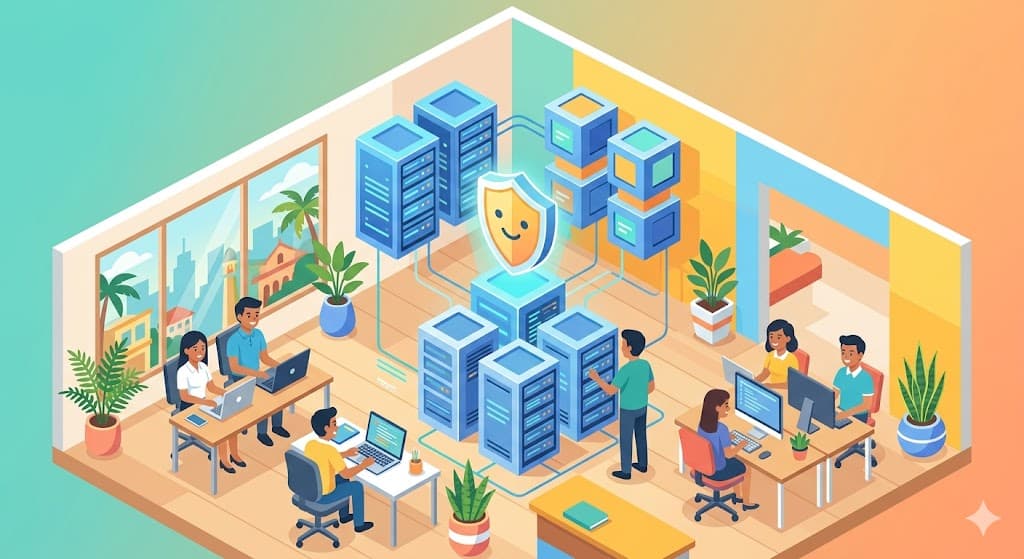
 Custom workflow design and retrieval-augmented generation keep an AI app grounded in real business data.
The second is retrieval-augmented generation, often shortened to RAG. In plain terms, it is a method where the AI looks up your own files, such as price lists or policy documents, before it answers a question. This keeps responses grounded in your business data instead of inventing details, which matters when a customer asks about your actual products.
The third combines AI-assisted coding with automated testing. AI tools are well-suited for drafting routine code and flagging mistakes, while automated tests check that new changes do not break old features. Modern web frameworks such as Next.js, a popular toolkit for building fast web applications, let a small team deliver a polished interface and solid AI features together. The goal is not to replace the developer but to remove repetitive work so attention goes to the parts that need human judgment.
Related: When to Build Custom AI Instead of Renting Tools explains this in detail.
A Step-by-Step Path to Your First AI App
| Step | Focus |
|---|---|
| 1. Business analysis | Define the problem, users, and what success looks like in writing. |
| 2. Data and privacy prep | Gather the data the app needs and plan Data Privacy Act compliance. |
| 3. Prototype | Build a small working version to test the idea before full spending. |
| 4. Phased build with reviews | Develop in stages, with weekly progress meetings and documented changes. |
| 5. Launch and improve | Release, monitor real use, and keep proposing improvements. |
Step one is honest business analysis. Before any code, write down the problem, who will use the app, and how you will know it works. This single document prevents most disputes later.
 Weekly reviews and documented changes during phased development are what keep costly rework down.
Step two is data and privacy preparation. Decide what information the app will collect, then plan for the Data Privacy Act of 2012, which requires consent, security measures, and in many cases a designated Data Protection Officer. Handling this early is far easier than retrofitting it.
Step three is a prototype, a small working version that proves the idea before you commit the full budget. Testing a rough version with a few real users reveals wrong assumptions while they are still cheap to correct.
Step four is the phased build, and it is where projects are won or lost. As a client managing large-budget projects, I established weekly progress meetings and made documentation of every specification change mandatory. That discipline minimized rework, because nothing was rebuilt from a half-remembered conversation.
Step five is launch followed by continuous improvement. In my experience, successful projects naturally produced improvement proposals after delivery, while failed ones simply stalled with no further suggestions. A good partner keeps watching how the app is used and recommends the next sensible step.
Related: Avoiding Costly AI Adoption Failures explains this in detail.
What Results Philippine SMEs Can Expect
| Outcome | What Changes |
|---|---|
| Less rework | Documented decisions stop the same work from being paid for twice. |
| Reliable releases | Automated testing and phased delivery reduce surprise breakages. |
| Compliance and trust | Privacy is built in, lowering legal risk and raising customer confidence. |
| Scalable foundation | A custom base grows with the business instead of being replaced. |
The clearest return is reduced rework. When specification changes are documented and reviewed weekly, the budget stops leaking on repeated fixes, and significant cost savings can be expected over the life of the project.
Reliability is the second gain. Phased delivery and automated testing mean issues appear in small, manageable pieces rather than as one large failure on launch day. Compliance is the third. Under the Data Privacy Act, violations can carry penalties reaching ₱5 million for serious cases, so designing privacy in from the start protects both the budget and the company's reputation. Finally, a custom foundation scales. Filipino users are already comfortable with AI tools, with a large share interacting with AI features and chatbots, so an app built on a solid base can add capabilities as demand grows rather than being thrown away and rebuilt.
FAQ
Q: Is a custom AI app worth it for a small Philippine business?
A: It depends on complexity. If your workflow is simple, a template or existing tool may be enough. Once your process has rules a generic tool cannot follow, a custom build usually costs less over time because it avoids constant workarounds and rework.
Q: How do I keep an AI project from going over budget?
A: Insist on a written specification, hold weekly progress meetings, and require that every change be documented before work continues. Most overruns come from undocumented changes, not from the technology itself.
Q: Do I need to worry about the Data Privacy Act for an AI app?
A: Yes, if the app handles personal data such as names, contact details, or financial information. Plan consent, security measures, and a Data Protection Officer where required from the start, since adding these later is slower and riskier.
Q: Will AI tools replace the developer I hire?
A: No. AI technology is well-suited for routine coding and error checking, but a person still defines the business problem, makes design decisions, and verifies that the result fits your operations.
Q: How can I judge the quality of a development partner before committing a large budget?
A: Ask for a small prototype or sample first to confirm a quality baseline, and watch whether they propose improvements proactively. Partners who suggest sensible next steps tend to deliver better long-term results than those who go quiet after delivery.
Getting Started With AI App Development
A reliable AI application is the product of clear analysis, documented decisions, and steady review, far more than any single tool. Start small: write down the one problem you most want solved, list the data involved, and ask for a prototype before committing a full budget. If you would like a partner to map that path with you, PH AI Works can help you scope a custom AI build suited to your business and to local compliance requirements. The author holds an IBM Full Stack Software Developer Professional certification and works on AI and web projects built mainly with Next.js.
Sources & References
- e-Conomy SEA 2025 Report (Google, Temasek, Bain & Co.) — Philippine digital economy size, growth, and AI usage among Filipino users.
- Philippine Institute for Development Studies (PIDS): PH businesses lag in AI adoption — establishment computer and internet ownership figures and low AI awareness among firms.
- Department of Information and Communications Technology (DICT) — national AI policy direction and support for MSMEs.
- National Privacy Commission: Republic Act 10173, Data Privacy Act of 2012 — legal basis for personal data processing, consent, and oversight.
- Centraleyes: Philippines Data Privacy Act of 2012 overview — compliance obligations, Data Protection Officer requirement, and penalty range.
About the author
Founder / AI Engineer (36+ years in IT)
- ●From Tokyo · based in Manila for 13+ years
- ●36+ years in IT (development, SEO, AI)
- ●Google Certified AI Professional
- ●IBM Certified Generative AI Engineer
- ●AI chatbots, RAG & AI agent development
A Japanese AI engineer with 36+ years in IT and 13+ years on the ground in the Philippines. I write from hands-on experience to help Japanese companies adopt AI that actually delivers results — chatbots, workflow automation, AI agents, and AI-driven marketing. Feel free to reach out in Japanese or English.
Your Competitors Are Already Using AI!
Is your business keeping up?
Related Articles

What a Philippine Company Website Needs Now
Most company sites are built for a desktop visitor who no longer matters. The specs that serve phones and AI search.
8/14/2026

Adding AI to Existing Systems: A Retrofit Flow
Most Philippine companies cannot rebuild before adopting AI. How a retrofit works — find the seam, build beside it, cut over.
8/12/2026

AI and Customer Experience: The Whole Journey
Adding one AI feature rarely fixes CX. How to design AI across the journey rather than bolting it onto one step.
7/27/2026

Building AI Web Apps: The Design Choices That Matter Most
AI web app projects in the Philippines usually fail on design, not on the AI. Human checkpoints, loading feedback, and more.
7/25/2026

Core Web Vitals for Philippine Online Stores
Core Web Vitals measure how fast and stable a site feels. How Philippine stores pass Google's thresholds and rank better.
7/9/2026
Docker and Kubernetes: Preventing Downtime in the PH
How Docker and Kubernetes keep online systems stable for Philippine SMEs, reduce downtime, and support steady business growth.
6/10/2026